




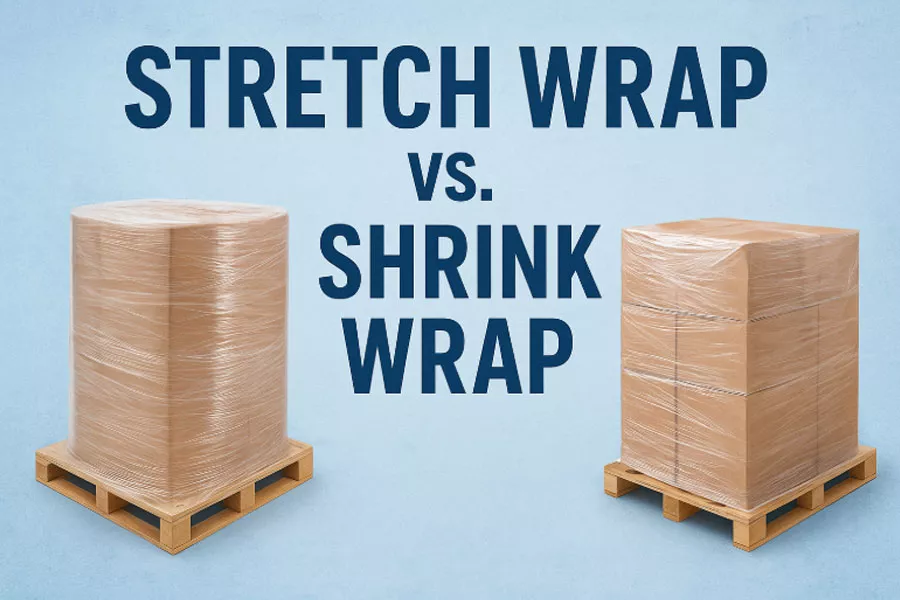
If you’re shipping products, storing inventory, or preparing pallet loads, choosing the right packaging material is essential for protecting your goods. While the names sound similar, Stretch Wrap and shrink wrap serve different purposes and are designed for different applications. Using the wrong type can lead to damaged products, higher packaging costs, and unnecessary frustration.
In this guide, we’ll explain the differences between stretch wrap and shrink wrap, how each one works, their advantages, common applications, and how to choose the right option for your business.
What Is Stretch Wrap?
Stretch wrap is a highly elastic plastic film made primarily from linear low-density polyethylene (LLDPE). It is stretched around products or palletized loads to create tension that keeps items securely in place.
Unlike shrink wrap, stretch wrap does not require heat to work. The film’s elasticity provides the holding force, making it an efficient and cost-effective solution for securing shipments.
Common Uses of Stretch Wrap
- Securing palletized shipments
- Preventing boxes from shifting during transportation
- Bundling multiple products together
- Protecting goods from dust and moisture
- Warehouse storage and inventory management
- Stabilizing irregularly shaped loads
Stretch wrap is available in both hand rolls and machine rolls, making it suitable for businesses of all sizes.
What Is Shrink Wrap?
Shrink wrap is a plastic film that shrinks tightly around an item when heat is applied using a heat gun or shrink tunnel.
Instead of relying on tension, shrink wrap forms a protective, form-fitting layer around the product. This creates a sealed package that offers excellent presentation while protecting items from dirt, dust, and moisture.
Common Uses of Shrink Wrap
- Retail product packaging
- Food packaging (food-grade shrink film)
- Gift baskets
- Electronics
- Books and printed materials
- Beverage multipacks
- Consumer goods
Shrink wrap is widely used when product appearance and tamper resistance are important.
Stretch Wrap vs Shrink Wrap: Key Differences
| Feature | Stretch Wrap | Shrink Wrap |
| Application | Stretched around products | Heated until it shrinks |
| Heat Required | No | Yes |
| Primary Purpose | Stabilize and secure loads | Seal and protect individual products |
| Material | LLDPE | Polyolefin, PVC, or Polyethylene |
| Common Use | Pallets and shipping | Retail packaging |
| Equipment Needed | Manual dispenser or stretch wrapper | Heat gun or shrink tunnel |
| Reusability | Often reusable | Usually single use |
| Cost | Lower packaging cost | Higher due to equipment and energy |
How Stretch Wrap Works
Stretch wrap is designed to elongate significantly before being wrapped around products. As the film attempts to return to its original size, it creates consistent pressure that holds boxes and products together.
The film also clings to itself, eliminating the need for adhesives or tape in many applications.
This makes stretch wrap ideal for:
- Shipping large quantities
- Warehouse operations
- Distribution centers
- Manufacturing facilities
How Shrink Wrap Works
Shrink wrap starts as a loose covering around the product.
After applying heat, the film shrinks uniformly around the item, producing a tight, professional-looking package.
The result is:
- Better product visibility
- Tamper-evident packaging
- Protection from contaminants
- Attractive retail presentation
This is why many retail products arrive in shrink-wrapped packaging.
Advantages of Stretch Wrap
1. Fast Application
Stretch wrap can be applied quickly by hand or using automated wrapping machines, increasing packaging efficiency.
2. Lower Packaging Costs
Since it doesn’t require heat equipment, stretch wrap often costs less to use than shrink wrap.
3. Excellent Load Stability
It keeps cartons securely together during transportation, reducing movement and minimizing product damage.
4. Flexible for Different Load Sizes
Stretch wrap adapts to loads of various shapes and sizes, including irregular pallet configurations.
5. Moisture and Dust Protection
Although it isn’t completely waterproof, stretch wrap provides an effective barrier against dirt, dust, and light moisture during shipping and storage.
Advantages of Shrink Wrap
Professional Appearance
Shrink wrap creates a clean, tight finish that enhances product presentation on retail shelves.
Tamper Evidence
A damaged shrink wrap seal can indicate that a product has been opened, making it useful for retail packaging.
Excellent Product Protection
Shrink wrap helps shield products from dust, moisture, and contaminants.
Custom Fit
The film conforms closely to the product, minimizing excess packaging material.
When Should You Use Stretch Wrap?
Stretch wrap is the better choice when you need to:
- Secure pallets for transportation
- Bundle multiple cartons together
- Prevent shifting during transit
- Store products in warehouses
- Protect inventory from dust
Industries commonly using stretch wrap include:
- Logistics
- Manufacturing
- Warehousing
- Distribution
- Wholesale
- E-commerce fulfillment
When Should You Use Shrink Wrap?
Shrink wrap is ideal when you need to:
- Package products individually
- Improve retail presentation
- Create tamper-evident packaging
- Protect products from contamination
- Bundle retail multipacks
Industries commonly using shrink wrap include:
- Food and beverage
- Consumer goods
- Cosmetics
- Electronics
- Publishing
- Retail
Stretch Wrap vs Shrink Wrap: Which Is Better?
Neither material is universally better—they simply serve different purposes.
Choose stretch wrap if your goal is to stabilize pallet loads, secure cartons during transportation, or protect warehouse inventory. It offers a cost-effective and efficient solution for shipping and logistics.
Choose shrink wrap if you need attractive retail packaging, tamper resistance, or a tightly sealed protective covering for individual products.
Many businesses use both materials because they address different packaging needs.
Tips for Choosing the Right Packaging Film
Before selecting between stretch wrap and shrink wrap, consider the following:
- Are you packaging individual products or pallet loads?
- Will the package require heat application?
- Is retail presentation important?
- Do you need tamper-evident packaging?
- What level of protection is required during shipping?
- Are you packaging by hand or using automated equipment?
- What is your packaging budget?
Answering these questions can help you choose the most suitable solution while improving packaging efficiency.
Common Mistakes to Avoid
- Using shrink wrap to stabilize pallets instead of stretch wrap
- Applying excessive stretch wrap, which increases material costs
- Using insufficient wrap layers, resulting in unstable loads
- Selecting the wrong film thickness for heavy products
- Applying uneven tension that causes load instability
- Using damaged or poor-quality film
Choosing the correct film and applying it properly can reduce shipping damage and improve operational efficiency.
Frequently Asked Questions
Is stretch wrap waterproof?
Stretch wrap offers resistance to moisture, dust, and dirt, but it is not completely waterproof for long-term outdoor exposure.
Does stretch wrap require heat?
No. Stretch wrap relies on the film’s elasticity and does not require any heat during application.
Is shrink wrap stronger than stretch wrap?
Not necessarily. Shrink wrap provides a tight protective seal, while stretch wrap delivers superior load stabilization for shipping and storage. The better option depends on your intended use.
Can stretch wrap be reused?
In some situations, stretch wrap can be reused if it remains clean and undamaged, though it is generally intended for single-use packaging.
Which is more economical?
For palletizing and shipping, stretch wrap is typically more economical because it requires no heat equipment and uses a simple application process.
Conclusion
Understanding the differences between stretch wrap and shrink wrap helps you choose the right packaging solution for your business. Stretch wrap is the preferred option for securing pallet loads, preventing product movement during transit, and improving warehouse efficiency. Shrink wrap, on the other hand, is ideal for creating attractive, protective packaging for individual retail products.
Selecting the right material can reduce shipping damage, improve packaging performance, and lower overall costs. If you’re looking for dependable packaging supplies, Starboxes offers a wide selection of high-quality stretch wrap and other shipping essentials to help businesses package products with confidence.