


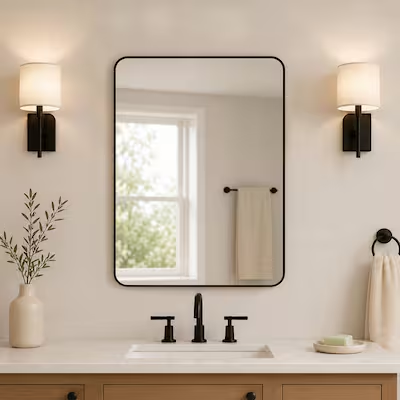
Mirror shape rarely gets the attention that size or lighting does during a bathroom renovation, but it quietly affects how much of the wall actually gets used. Square bathroom mirrors make better use of a rectangular wall space than round or oval alternatives, since there’s no wasted corner area outside the reflective surface. For anyone working with a standard vanity width, that difference adds up.
The shape also tends to read as more architectural and less decorative than an oval or arched mirror, which fits the clean-lined look many current bathroom renovations are going for. Choosing the right square mirror still comes down to a few practical details: sizing relative to the vanity, frame style, and whether it needs to accommodate wall-mounted lighting on either side.
Sizing Relative to the Vanity
Getting the proportions right is the single biggest factor in how well square bathroom mirrors actually look once installed.
- Width guideline: a common rule of thumb is keeping the mirror two to four inches narrower than the vanity or sink area on each side, so the mirror doesn’t overhang the counter or crowd nearby fixtures.
- Height above the vanity: mounting height typically falls between four and six inches above the faucet or backsplash, though this shifts depending on ceiling height and whether wall sconces flank the mirror.
- Double vanities: two smaller square mirrors, one per sink, often read better than a single oversized mirror spanning the whole counter, since each mirror lines up with its own task area.
- Small bathrooms: an oversized square mirror can still work well in a small space, since the flat edges make better use of limited wall width than a round mirror would in the same footprint.
Getting size wrong in either direction, too small or too large for the vanity, is the most common mistake homeowners make when shopping by photo alone rather than measuring the actual wall first.
Frame Style and Material
Square bathroom mirrors come in both framed and frameless versions, and the choice affects both look and long-term maintenance.
- Frameless mirrors use polished or beveled edges instead of a surrounding frame, giving a cleaner, more minimal look that works well in contemporary bathrooms.
- Metal-framed mirrors, often in black, brushed nickel, or matte finishes, add a defined edge that can tie into other bathroom hardware like faucets or cabinet pulls.
- Wood-framed mirrors bring warmth to an otherwise cool, tiled space, though wood frames need to be rated for humidity to avoid warping over time in a poorly ventilated bathroom.
- Beveled edges on a frameless mirror add subtle depth and catch light differently than a flat-cut edge, a small detail that changes how the mirror looks depending on the angle it’s viewed from.
Frame material should generally match or complement other finishes already committed to in the bathroom, since a mismatched frame finish tends to stand out more than a mismatched mirror shape would.
Lighting Compatibility
Square bathroom mirrors pair with a wider range of lighting setups than curved shapes, since the flat edges align cleanly with fixtures mounted directly above or beside them.
- Wall sconces on either side work particularly well with a square mirror, since the straight vertical edges give a clean reference line for symmetrical placement.
- Overhead vanity lights mounted directly above the mirror avoid the awkward gaps that can appear above a rounded or arched shape.
- Integrated LED lighting, where the light source runs along the frame itself, is increasingly available on square mirrors and offers an adjustable color temperature range, typically between 3000K and 6000K, for different times of day.
- CRI rating matters for any lit mirror used for grooming tasks, with a rating of 90 or above preferred for accurate skin tone and color rendering.
For anyone planning to add wall sconces or a light bar during a renovation, confirming the mirror’s dimensions against the planned fixture placement before ordering avoids a mismatch that’s hard to fix after installation.
Mounting and What to Confirm Before Ordering
Installing square bathroom mirrors is generally more straightforward than mirrors with irregular shapes, but a few details are still worth confirming in advance.
- Check whether the mirror uses clips, adhesive, or a French cleat mounting system, since each has different wall preparation requirements and weight limits.
- Confirm glass thickness, typically between 1/4 and 3/8 inch, since thicker glass holds up better against flexing or cracking over time, particularly for larger mirrors.
- If the mirror includes integrated lighting, verify ETL or UL certification, confirming the electrical components meet a recognized safety standard.
- Confirm the shipping timeline and return policy, especially for larger sizes that are more costly to return if the fit isn’t right.
Retailers focused specifically on bathroom fixtures, such as Allsumhome, typically list exact dimensions, glass thickness, and mounting hardware directly on the product page, which makes it easier to plan around an existing vanity and lighting layout without guesswork. Free shipping within the contiguous United States has become close to standard among fixture retailers, though return windows for larger mirrors are worth confirming before ordering.
Square bathroom mirrors earn their popularity through practicality as much as style. The shape uses wall space efficiently, pairs cleanly with a wide range of lighting setups, and tends to age well against changing design trends better than more decorative shapes. Getting the size right relative to the vanity remains the detail that matters most, regardless of frame style or finish chosen.