


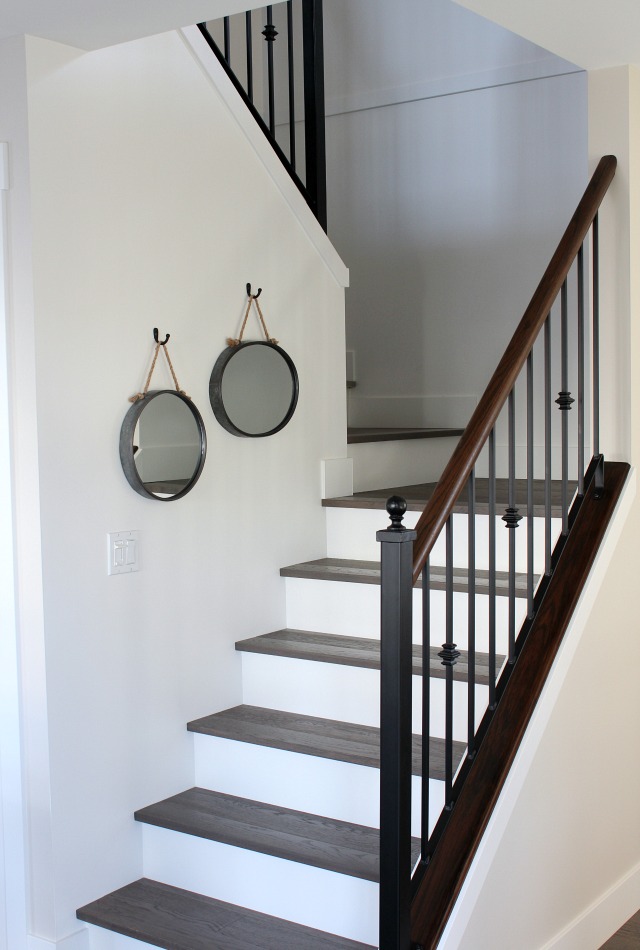
Removing carpet can reveal a staircase with strong design potential, but converting it to hardwood requires more than selecting an attractive wood species. The existing structure, tread profile, finish, measurements, and surrounding flooring must all be evaluated before materials are ordered. For many remodeling projects, red oak stair treads offer a practical balance of visible grain, warm coloring, reliable performance, and broad stain compatibility.
Start by Inspecting the Existing Staircase
Once the carpet and padding are removed, the installer can assess the condition of the underlying stairs. Staples, tack strips, adhesive, paint, and old fasteners must be cleared before accurate measurements or installation can begin.
The existing treads should be checked for movement, cracks, uneven surfaces, water damage, and excessive wear. Loose components may need to be secured, while damaged areas may require repair or replacement. Covering structural problems with new hardwood will not correct the cause and may lead to noise, poor fit, or movement later.
The installer should also examine riser height, tread depth, nosing, stringer placement, and the transition to the floors at the top and bottom. Changes in finished material thickness can affect step consistency, so the full staircase should be considered as one assembly.
Why Is Red Oak Suitable for Stair Remodeling?
Red oak has a prominent grain pattern and warm natural undertones. Depending on the finish, its coloring may range from pale tan to medium brown with subtle reddish notes. This allows it to work with many traditional, transitional, and contemporary interiors.
Its open grain accepts a wide range of stains, making it useful when a project needs to coordinate with existing oak flooring, handrails, doors, or cabinetry. A natural or lightly stained finish emphasizes the grain, while medium and dark stains create a stronger architectural presence.
Red oak is also widely used in flooring and millwork. That familiarity can make it easier for dealers and design professionals to explain its appearance and help customers coordinate related materials. Natural variation should still be expected because no two hardwood components will have identical grain or coloring.
Select the Right Tread Construction
A carpet conversion does not automatically require the same tread type in every property. The correct construction depends on the condition of the existing staircase and the planned installation method.
Retro treads are designed to cover suitable existing stair treads. Their thinner body and built-in nosing make them a common choice for carpet-to-hardwood projects because they may reduce the need for major demolition.
Traditional treads are thicker components typically installed directly on the stair structure. They are more appropriate for new construction or remodeling work where the original treads will be removed completely.
Before making a selection, the contractor should confirm that the proposed tread thickness will maintain consistent riser heights. Local building requirements may also govern dimensions, nosing, handrail placement, and other safety factors.
Identify the Required Return Configuration
Each step must be classified according to which sides will remain visible after installation.
Closed or box treads are used when both ends meet walls or enclosed stringers. A left-return tread has a finished exposed edge on the left when the staircase is viewed from below. A right-return tread has that edge on the right. Stairs open on both sides may require double-return components.
Return direction should never be assumed from a drawing alone. Photographs taken from the bottom of the staircase, along with a numbered tread schedule, can help the supplier confirm the configuration. Ordering the incorrect return may delay installation because this finished edge is manufactured as part of the tread.
Compare Prefinished and Unfinished Material
Prefinished red oak treads arrive with the stain and protective coating already applied. This reduces on-site sanding, staining, coating, and drying. It can be valuable in occupied homes where dust, odors, restricted access, and extended project schedules are concerns.
Unfinished material gives the contractor control over the final color and sheen. It may be preferred when matching older site-finished flooring or when the design calls for a specific stain formula. However, it also requires appropriate sanding, application, ventilation, drying, and curing conditions.
Project teams should compare the full installed process rather than material price alone. Labor, additional visits, site protection, finishing supplies, and lost access to the staircase may affect the actual cost difference.
Measure Every Tread Separately
Staircases are rarely as uniform as they appear. Width and depth can vary slightly from one step to another, particularly in older homes. Each tread should therefore be measured and recorded separately.
The material schedule should include tread width, depth, return direction, riser dimensions, landing conditions, and irregular steps. Winding or pie-shaped stairs may require templates or specially made parts. Measurements taken after carpet removal are generally more useful because the installer can see the actual structure.
Coordinate the Entire Stair Assembly
Treads should be planned alongside risers, landing tread, cove moulding, handrails, balusters, and newel posts. Painted risers can provide contrast, while matching wood risers create a more continuous appearance. Landing materials and adjacent flooring should also be reviewed for grain direction, stain tone, and sheen.
Physical samples are particularly important when matching existing flooring. Screens and photographs cannot reliably represent stain color under the project’s lighting conditions.
A well-planned conversion starts with structural inspection, precise measurements, approved samples, and a complete component list. Visit Wood Stair Co to compare red oak tread configurations, review finishing choices, and prepare the materials for your next carpet-to-hardwood staircase project.