


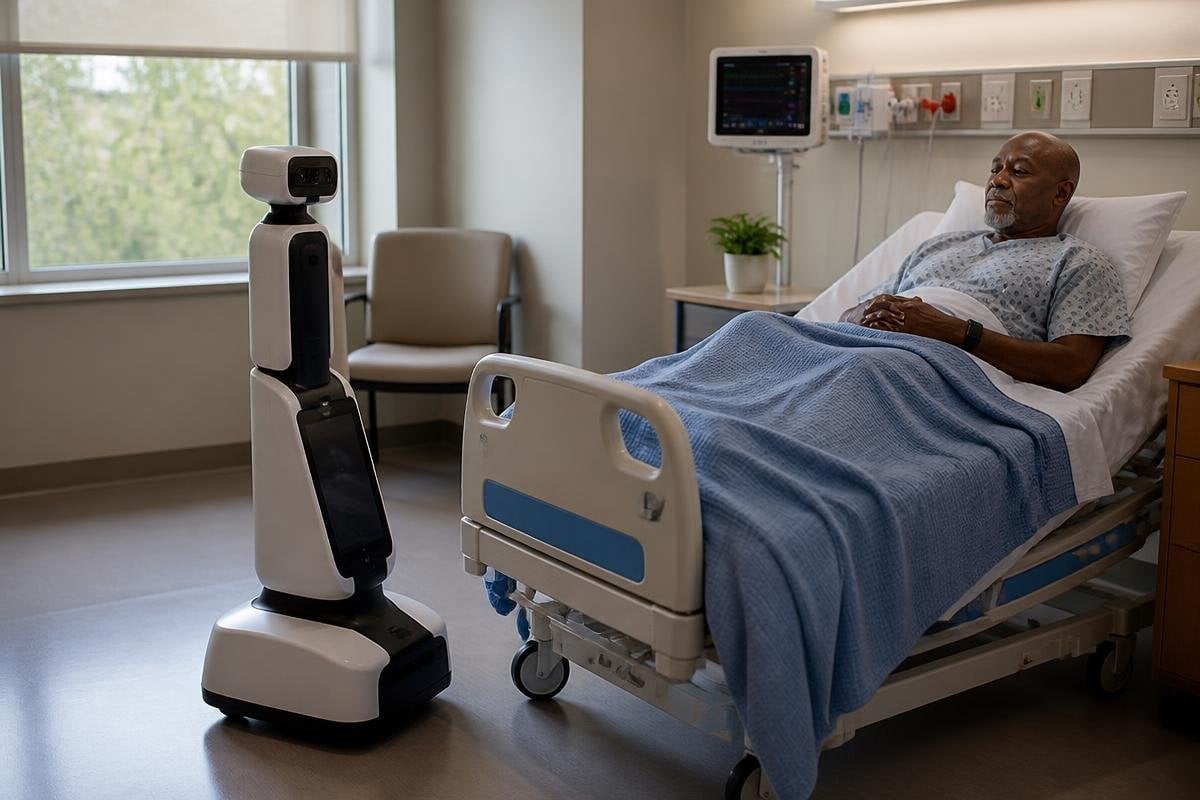
A healthcare robot may record video, sound, movement, location, and health details during one task. The privacy rules around it need to cover the full path of that data, from the sensor to the company server.
Quick read
- Sensors can collect more than the task requires
- Video and audio need clear limits on storage and access
- A useful privacy plan names who can see the data and when it gets deleted
The robot sees more than the task
A delivery robot may need a camera to find a doorway. A lifting robot may need depth data to avoid a person’s arm.
A mobile platform may need a map of rooms and a record of where it has moved. Each sensor can collect details about people who never agreed to take part.
That creates a gap between the robot’s job and the data it can gather. A camera pointed at a hospital corridor may record patients, visitors, staff badges, and medical screens even when the robot only needs to find a route.
The first privacy question is precise: what data does this task need? If a robot can work with depth points instead of full video, the system should use the smaller data set. If an alert needs a time and room number, it may not need a face or a name.
Data needs a clear path
Privacy protection depends on what happens after collection. A robot may process data on its own computer, send it to a local hospital system, or pass it to a vendor’s remote server for storage or analysis. Each step creates another place where access can fail.
The people who run the robot should be able to see that path. They need a record of what the robot collects, where the data goes, who can open it, and how long the system keeps it. A vague label such as “service data” doesn’t tell a hospital enough.
Access should match the job. A technician may need motor logs to repair a drive, while a clinical manager may need task records. Neither role automatically needs full camera footage or patient details.
That rule reaches the robot’s own logs and cameras. A hospital buyer can use Robot24 to check named systems and reported data flows before deciding which access each staff role should have.
Privacy must include the robot itself
A robot can expose data through more than its main software. Debug files, camera caches, maintenance laptops, wireless links, and user accounts can all hold copies. A system that protects its central database but leaves local files open still has a privacy gap.
The robot should collect only what the task needs, protect data while it moves, and limit stored copies. Operators also need a way to pause recording when a task does not require it. A visible status light or screen can show when sensors are active, especially in rooms where people may not expect recording.
Deletion needs a real rule. “Kept as long as needed” leaves too much room for guesswork. A hospital should set a retention period for each data type, record deletions, and make exceptions visible when a legal or care requirement calls for longer storage.
People need control and notice
Patients and staff should know when a robot is collecting information and why. The notice needs plain words, not a long list of technical terms. It should say what the robot records, who receives it, how long it stays, and who can answer questions.
Consent may matter for some uses, but it cannot solve every case. A person may enter a robot’s route without a practical way to refuse video capture. That makes data reduction, access limits, and deletion just as important as the notice.
Healthcare teams also need a way to report a privacy problem. The report should identify the robot, time, location, data involved, and people who may have accessed it. That gives the hospital a usable record instead of a general complaint.
A practical privacy check
Before a healthcare robot enters regular service, check these points:
- Name the task and remove sensors the task does not need
- Map every device, server, account, and vendor that receives data
- Set access by job, with separate accounts for operators and repair staff
- Show when recording is active and give people a clear notice
- Set a deletion date for each stored data type
- Test the pause, access, and deletion controls before patient use
The strongest plan is one a nurse, technician, and patient can understand without reading the robot’s source code. I’d reject any hospital deployment that cannot show where its sensor data goes and when that data disappears.
Healthcare robots will keep gaining sensors as their tasks grow. Privacy rules need to grow with them, with the next review tied to each new sensor, software update, and data-sharing agreement.